Farm crews need one toilet within a quarter mile walk for every 20 hand-labor workers, per OSHA 1928.110, and Kansas City Porta Pros sets units at field edges, barn lots and grain sites across the Kansas City area. A standard unit runs $100 to $350 a day depending on term.
OSHA 1928.110 sets the baseline for agricultural field sanitation: potable water, toilets and handwashing within a quarter mile walk, at one facility per 20 hand-labor employees. That is a different standard than general construction sanitation under OSHA 1926.51(c), which farm operations sometimes run alongside if there's a building project on the property too. A 40-acre vegetable operation with 15 pickers needs one unit, placed where workers can actually reach it inside that quarter mile. A larger harvest crew spread across several fields needs units staged at each work zone, not one unit at the farm entrance a mile from where anybody's standing. Kansas City Porta Pros services farms from North Kansas City, 2.6 miles northwest of downtown, out through Liberty, 15.0 miles northeast, and into row-crop ground near Raytown, 13.6 miles southeast. Use our how many porta potties do I need guide if your crew count changes by season. Standard units carry a 60 to 70 gallon holding tank and stand about 92 inches tall, which clears most gate openings and trailer decks without trouble. For longer harvest seasons, a monthly rental usually costs less per day than booking week to week, and we can walk you through both options during a quote request.
| unit | duration | typical price |
|---|---|---|
| standard | day | $150 |
| standard | week | $200 |
| standard | month | $200 |
Pricing above reflects our measured range; see full detail on the porta potty rental cost page.
Farms spraying herbicides or insecticides fall under OSHA 1926.51(f)(1), which requires washing facilities specifically where those chemicals are applied. That's separate from general field sanitation and it matters if your crew handles product regularly. A handwashing station rental placed near the mixing area or loadout point covers that requirement without asking workers to walk back to the barn. Under 29 CFR 1910.141(d)(2), any washing facility needs soap and a towel or hand-drying device; hand sanitizer alone doesn't satisfy that. We stock both portable sink units with running water and simpler hand sanitizer stations for lower-risk zones like a produce stand or a farmers market booth. Livestock operations around Kansas City often pair a restroom with a wash station near milking parlors or feed lots, since crews move between animal contact and breaks all day. If your farm also runs a hog or dairy operation with a septic system serving the house or a processing building, our septic pumping service and how often to pump a septic tank page cover the 3 to 5 year interval typical for a residential-scale tank, driven by tank size and household or crew size. Grease from any on-site kitchen or food stand gets pumped once fats, oils and solids reach 25 percent of liquid depth in the interceptor, which our grease trap pumping crew checks on routine visits.
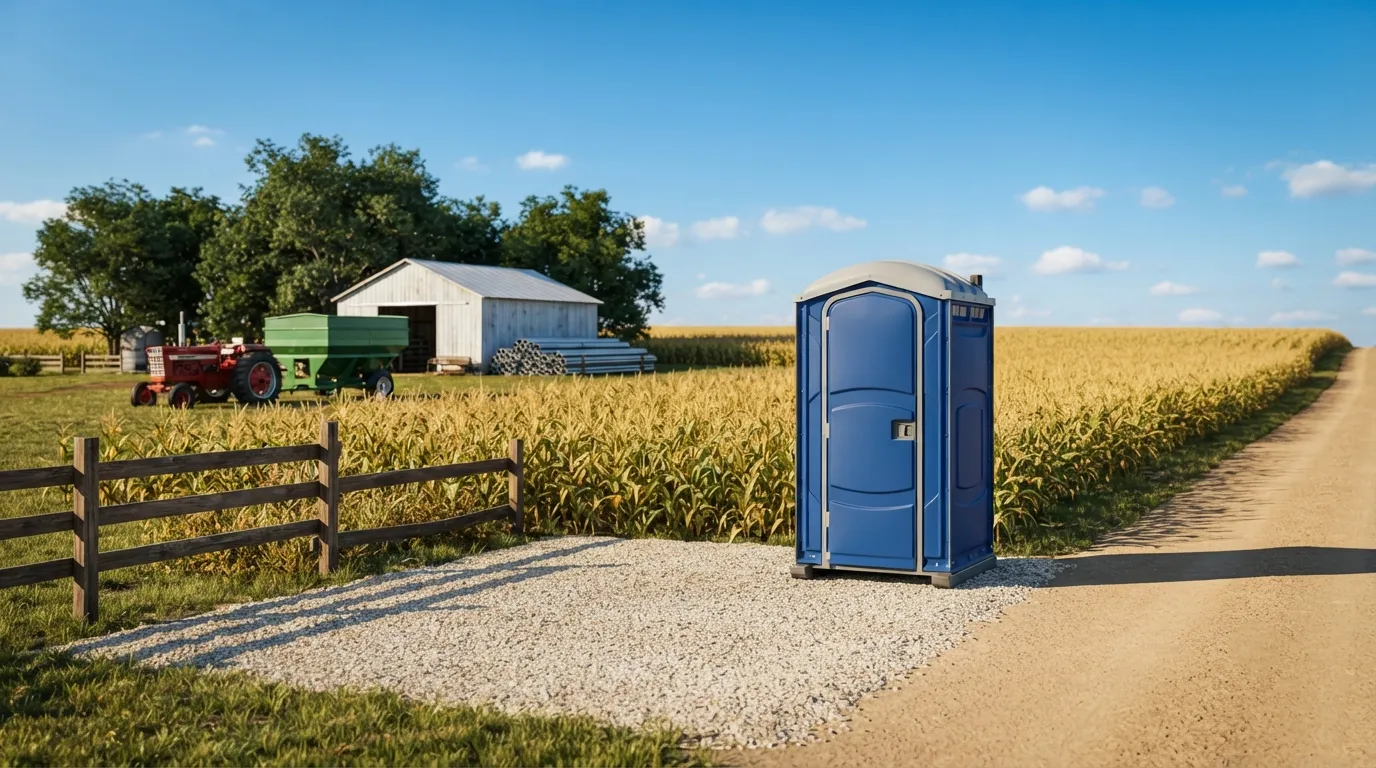
Ground stability matters more on a farm than almost anywhere else we deliver. A unit set on soft field edge after rain sinks, tips, or becomes unreachable by the next service truck. We look for a level, accessible spot within that quarter-mile OSHA 1928.110 walk radius, close enough to a farm road that our truck can service it weekly without crossing planted ground. ANSI/PSAI Z4.3 sets a baseline service interval of once weekly for units seeing normal use, though heavy harvest crews often need more frequent pumping, which we schedule directly with the farm manager. If a farm sits near a fairground or event space, we also handle short-term needs like county fair restrooms or a farm and agricultural restrooms setup that scales up during harvest festivals. Our porta potty placement guide covers ground prep in more depth. For crews working through a Kansas City winter, check porta potty in winter before frost sets in, since standing water and freeze cycles change how units need to be serviced. Farms near Gladstone, 8.2 miles north of the city, and Blue Summit, 7.2 miles southeast, both fall inside our standard delivery zone without extra travel charges.
Yes. We cover the wider Kansas City region including Liberty, Raytown, Gladstone and Blue Summit, all measured drive distances from downtown. Call ahead during planting or harvest season since farm routes fill up fast and we schedule delivery around field access.
Depends on crew size. OSHA 1928.110 sets one toilet per 20 hand-labor workers within a quarter mile. A 10-person crew in one field can share a unit; a 40-person crew spread across three fields needs units at each site.
Standard units carry a 60 to 70 gallon holding tank, enough for a normal work week under ANSI/PSAI Z4.3 service intervals. Heavier crews or hot weather may need mid-week service added.
Yes, when required. OSHA 1926.51(f)(1) applies specifically to paint, coating, herbicide or insecticide application. We place a portable sink rental or handwashing station near the mixing or loadout area to meet that standard.
Usually. We need a level, stable spot our service truck can reach weekly. Soft or muddy ground causes problems, so tell us about field conditions when you request a quote so we can plan the route.
Yes. Kansas City Porta Pros delivers farm and agricultural restrooms across Kansas City and the surrounding metro, with same-day and next-day drop-off available on most orders.
Pricing depends on the unit and how long you need it. See our cost breakdown and request a free quote for an exact figure.
Standard rentals include scheduled service — a pump-out, a clean, a restock and fresh deodorizer. Busy or hot-weather sites can be serviced more often.
Call now or request a free quote — clean units, on-time delivery, transparent pricing.