Do you legally need a handwashing station in Kansas City? If you're applying paints, coatings, or pesticides on a job site, yes: OSHA 1926.51(f)(1) requires washing facilities for that work. General worksites fall under broader sanitation rules, and soap plus towels are non-negotiable under 29 CFR 1910.141(d)(2).
The rule people misquote most is 1926.51(f)(1). It does not mean every construction site needs a handwash station parked next to the porta john. It means washing facilities are required specifically where workers apply paints, coatings, herbicides or insecticides, or handle other harmful contaminants. Painting crews, pesticide applicators, and anyone doing surface prep with chemical strippers fall under this one. If your crew is just framing or pouring concrete, this specific citation doesn't apply, though general sanitation rules under OSHA 1926.51(c) still govern toilet counts. Once a station is required, 29 CFR 1910.141(d)(2) kicks in too: soap and towels or a hand-drying device, not a bottle of sanitizer sitting on a stand. Kansas City Porta Pros sets up compliant stations for construction site services across the metro, and we get calls from foremen who assumed a case of hand sanitizer covered them. It doesn't. If you're unsure whether your scope of work triggers this, ask before the inspector does.
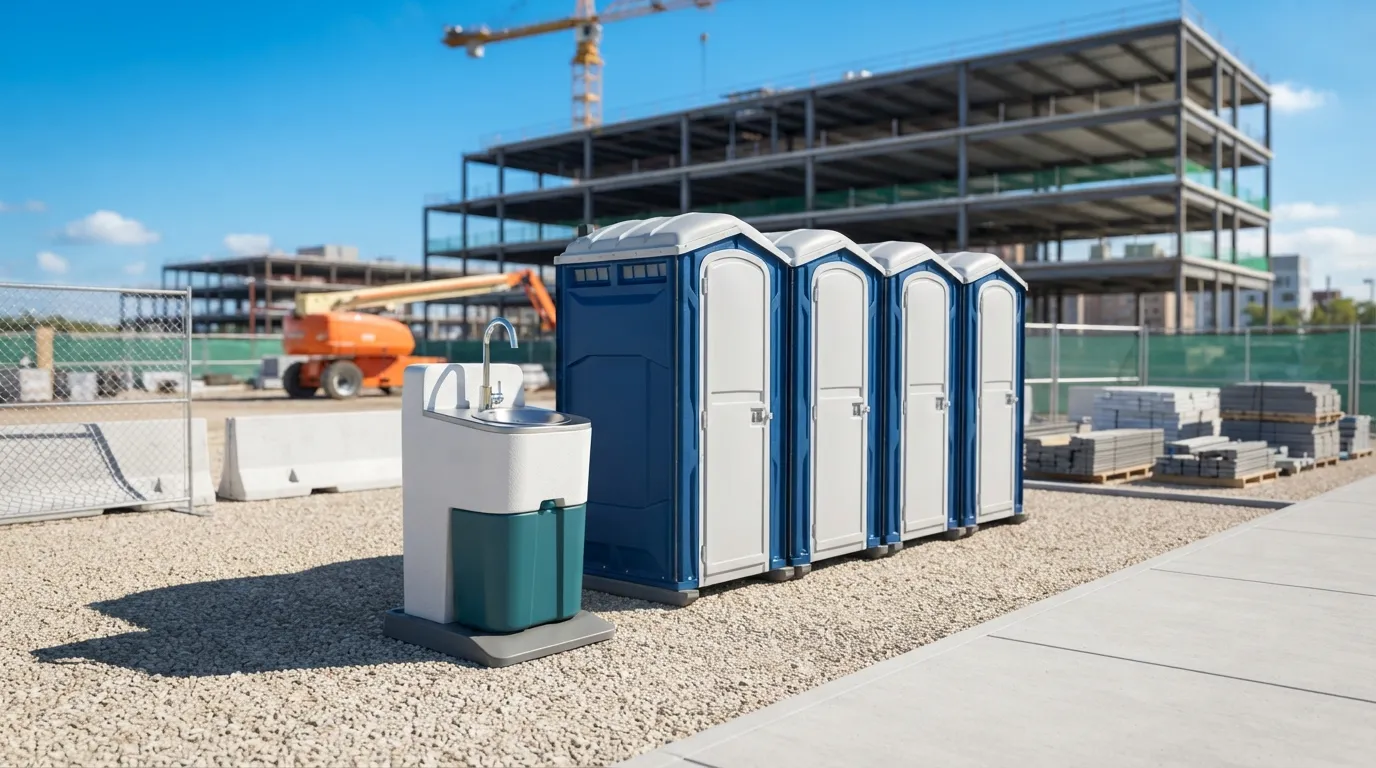
There's no separate headcount formula published for handwashing units the way there is for toilets. OSHA 1926.51(c)(1) sets toilet ratios at 1 per 20 workers up to 20 people, then 1 toilet and 1 urinal per 40 workers beyond that. Most crews in Kansas City pair one handwashing station per cluster of toilets rather than one per worker, which keeps traffic moving during breaks and lunch. A crew of 25 on a renovation site might run two toilets and one wash station; a 100-person build downtown near the Kansas City area's larger commercial projects needs several of each, spaced so nobody's walking the length of the site to wash up. If you're staging a farm operation instead, note that OSHA 1928.110 sets a different standard for agricultural field sanitation: one facility per 20 hand-labor employees, reachable within a quarter mile. That number matters for farm and agricultural restrooms work outside the city core, in places like Liberty, 15.0 miles northeast, or Raytown, 13.6 miles southeast.
Put them where the contaminated work happens, not off in a corner because it's convenient. If you're mixing coatings on the north end of a lot in North Kansas City, 2.6 miles from downtown, the wash station belongs near that mixing area, not by the site trailer 200 feet away. Ground surfaces need to be stable and slip-resistant per ADA Standards 302.1, which matters just as much for a portable sink on wet ground as it does for an accessible restroom ramp. If you're also running an ADA accessible porta potty on site, remember the accessible route needs a minimum 36 inch clear width under ADA Standards 403.5.1, and any door on the unit needs at least 32 inches of clear opening per ADA Standards 404.2.3. A handwashing station near that unit should sit within reach, not require a detour around equipment or fencing. Pair it with a temporary fence rental layout that keeps walking paths clear, and check placement against our porta potty placement guide before delivery day.
Yes, and the standard people lean on is ANSI/PSAI Z4.3, which sets a baseline service interval of once weekly for up to 10 users over a 40 hour week. Events don't run 40 hour weeks, they run a single weekend at high density, so servicing needs to scale up, not follow that baseline literally. A wedding at a venue outside Kansas City, a festival downtown, or a golf tournament all pull crowds that go through soap and towels fast. We stage stations for event restroom rental jobs, wedding restroom rental setups, and festival restroom rental work, and the wash stations always go near the food service and restroom clusters, never off by themselves. For a marathon and race restrooms event strung along a route, stations get spread at intervals instead of clustered at one finish line. If you're running a county fair restrooms event with food vendors, expect to need more stations than a straight portable toilet count would suggest, since food handling adds its own washing demand separate from restroom use.
| Service | Duration | Typical Range |
|---|---|---|
| Standard porta potty | day | $100 - $350 |
| Standard porta potty | week | $130 - $500 |
| ADA unit | week | $120 - $240 |
| Delivery fee | week | $50 - $150 |
Handwashing stations are usually quoted as part of a bundled site package rather than priced alone; ask for a combined quote through request a quote.
No. 29 CFR 1910.141(d)(2) requires soap and towels or a hand-drying device where washing facilities are mandated. Sanitizer gel doesn't satisfy that rule on its own. If your crew works with paints or pesticides under 1926.51(f)(1), you need actual running water, soap, and towels on site, not a wall-mounted pump bottle.
Yes. Kansas City Porta Pros rents portable sink rental units and hand sanitizer station rental equipment as standalone items. Plenty of food trucks, small retail pop-ups, and short-term vendor booths just need a wash station, not a full restroom setup.
Most sites use the same weekly baseline as portable toilets, per ANSI/PSAI Z4.3, which covers up to 10 users over a 40 hour week. High-traffic events or larger crews need more frequent refills of soap and paper towels, sometimes mid-week top-offs depending on headcount.
A handwashing station has running water, soap, and towels, meeting 29 CFR 1910.141(d)(2). A sanitizer station is just gel or foam on a stand. Sanitizer stations work fine for general foot traffic at events but don't satisfy OSHA's washing facility requirement for contaminant-related work.
Placement in the public right of way needs confirming with the City of Kansas City before delivery. Check our porta potty permit requirements page and confirm with the city directly, since rules vary by location and event type.
Yes. Kansas City Porta Pros delivers handwashing station requirements across Kansas City and the surrounding metro, with same-day and next-day drop-off available on most orders.
Pricing depends on the unit and how long you need it. See our cost breakdown and request a free quote for an exact figure.
Standard rentals include scheduled service — a pump-out, a clean, a restock and fresh deodorizer. Busy or hot-weather sites can be serviced more often.
Call now or request a free quote — clean units, on-time delivery, transparent pricing.