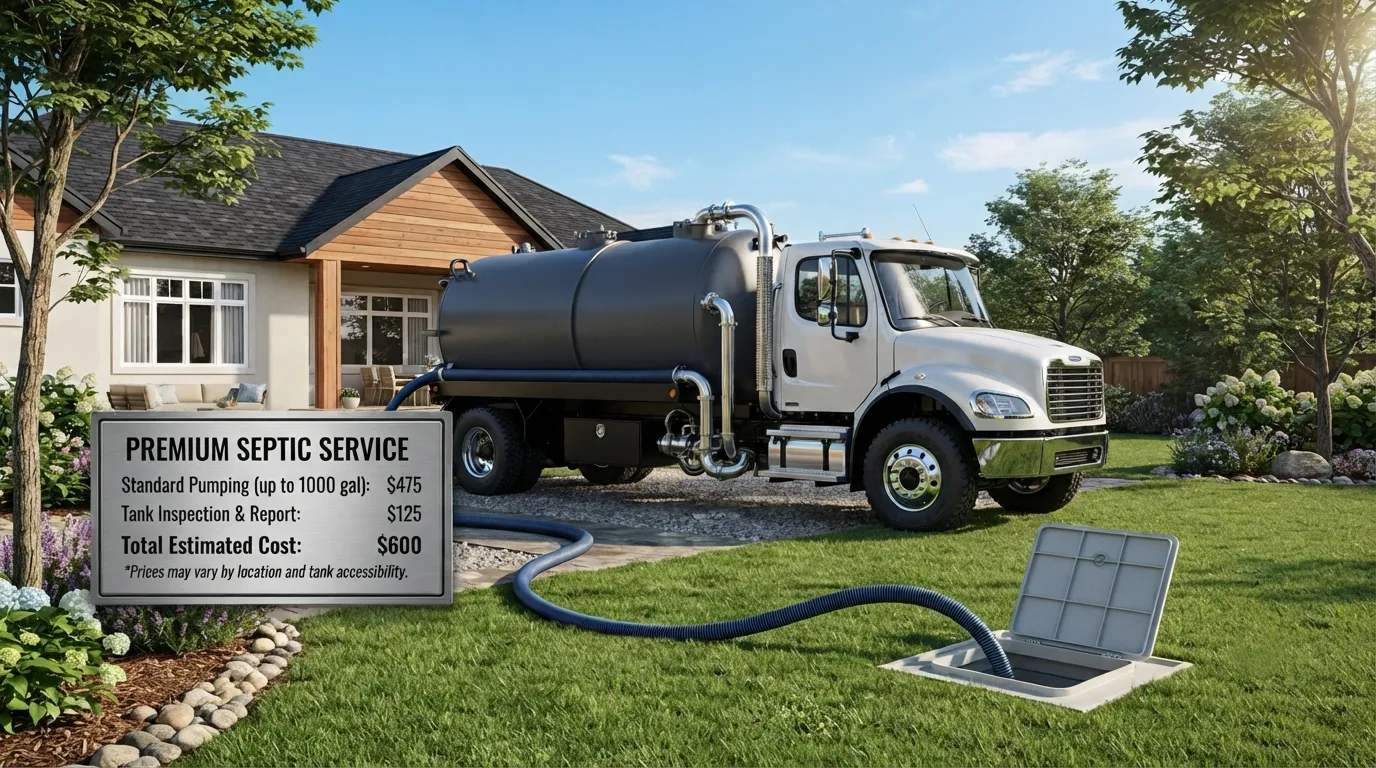
Septic tank pumping in Kansas City runs $150 to $300 for a standard daytime service call, with weekend pumping priced separately at $50 to $150. A typical 1,000 gallon tank needs pumping every 3 to 5 years, depending on household size and tank capacity. Kansas City Porta Pros prices by tank condition and access, not guesswork.
A day-rate septic pump-out in Kansas City lands between $150 and $300, and that range covers most residential jobs on a standard 1,000 gallon tank. Weekend calls run $50 to $150 as a separate line item, not stacked on top of the day rate. What moves the number: how deep the tank sits, how far the truck has to run its hose, and whether the lid needs digging out or already has a riser. Kansas City Porta Pros quotes after a quick look at the tank, not off a phone guess. If you are also dealing with a clogged line or backed-up drainfield, that is a different service call, and it helps to know the difference before you book. Homeowners searching near North Kansas City, about 2.6 miles northwest of downtown Kansas City, or out toward Gladstone, roughly 8.2 miles north, pay inside that same band. Tank size and access dominate the price far more than zip code does. For a fuller breakdown of what drives the number up or down, see Septic Tank Pumping Cost in Kansas City, MO, the cluster hub this page sits under, or start with Septic Pumping Service for the base service description.
Tank size is the first variable. A 1,000 gallon residential tank costs less to pump than a 1,500 gallon tank simply because there is more to haul. Access is the second: a tank buried under two feet of soil with no riser takes longer to open than one with a visible lid, and that labor shows up on the invoice. Grease and solids matter too. A grease interceptor gets pumped once fats, oils, grease and solids reach 25 percent of the liquid depth, and that threshold applies to commercial kitchens more than homes, but the same buildup logic drives residential tank wear. See Grease Trap Pumping if that is your situation instead. Distance from base also plays in. A property out past Raytown, about 13.6 miles southeast of Kansas City, or Liberty, roughly 15.0 miles northeast, may carry a small trip charge folded into the quote. Ask about Septic Tank Cleaning pricing specifics when you call, and mention whether your tank has a riser already installed.
Most residential tanks need pumping every 3 to 5 years, and that interval is driven by tank size relative to household size, not a fixed calendar date. A family of six on a 1,000 gallon tank fills faster than a couple in the same size tank, so the interval shortens accordingly. Waiting too long lets solids migrate into the drainfield, and that repair costs far more than a pump-out ever will. If you are unsure where your property falls, How Often To Pump a Septic Tank walks through the math by household size. Watch for slow drains, gurgling pipes, or standing water near the tank lid. Those signs mean the tank is past due, and Septic Tank Warning Signs covers the full list worth checking twice a year. Kansas City properties on older systems, especially those installed before modern tank sizing became standard, sometimes need shorter intervals. A pumping company that has serviced Kansas City tanks for years will know the difference between a tank due for maintenance and one showing early failure.
Sometimes a pump-out reveals a bigger problem, and it's better to know before the truck leaves. If the drainfield is saturated or the tank baffle has failed, pumping buys time but doesn't fix the root issue. That's a conversation to have on site, not after the invoice. Construction projects, renovations, and events sometimes need a temporary solution instead of septic repair entirely: a Holding Tank Rental covers that gap while permanent work gets scheduled. If you're mid-renovation and don't want to deal with the existing system at all, pair that with a Home Renovation Porta Potty for crew and family use. Emergency situations, like a tank backing up on a weekend, fall under Emergency Septic Service, and that call gets a faster response than a standard scheduled pump-out. Farms and agricultural properties around Kansas City often run separate systems entirely; see Farm and Agricultural Restrooms if hand-labor crews need OSHA 1928.110 compliant facilities on site instead of relying on a house septic system.
| service | duration | low | typical | high |
|---|---|---|---|---|
| septic pumping | day | $150 | $250 | $300 |
| septic pumping | weekend | $50 | $100 | $150 |
Those numbers cover the pump-out itself. If your project also needs portable sanitation, a Portable Toilet Rental or Standard Porta Potty Rental runs on a separate schedule and separate price sheet entirely, so don't assume one quote covers both. Construction sites needing OSHA 1926.51(c) compliant toilet ratios alongside septic service should check Construction Site Services for the combined picture. If you're comparing rental costs generally before deciding what you need, Porta Potty Rental Cost in Kansas City, MO and Porta Potty Rental Per Day in Kansas City, MO break down that side. Kansas City Porta Pros quotes septic and portable sanitation as separate line items so you're not paying for capacity you don't need.
A 1,000 gallon tank, the most common residential size, runs $150 to $300 for a standard weekday pump-out in Kansas City. Weekend service adds a separate $50 to $150 charge. Larger tanks or hard-to-access lids push toward the higher end of that range.
Yes. Standard day-rate service costs less than weekend service, which runs $50 to $150 as its own charge rather than a markup on the day rate. Scheduling ahead during the week is the simplest way to keep the bill down.
Slow drains, gurgling pipes, sewage odor, or standing water near the tank are the clearest signs. Most tanks need service every 3 to 5 years based on household size. See Septic Tank Warning Signs for the complete list before assuming it's urgent.
Yes, significantly. A tank with an existing riser and visible lid costs less to service than one buried under soil that needs digging out first. Ask about riser installation if you pump every few years; it saves labor cost each visit.
Yes. Backed-up systems and weekend emergencies get routed through Emergency Septic Service rather than the standard schedule. Response is faster than routine booking, and pricing reflects the urgency of same-day or after-hours work.
Yes. Kansas City Porta Pros delivers septic tank pumping cost across Kansas City and the surrounding metro, with same-day and next-day drop-off available on most orders.
Pricing depends on the unit and how long you need it. See our cost breakdown and request a free quote for an exact figure.
Standard rentals include scheduled service — a pump-out, a clean, a restock and fresh deodorizer. Busy or hot-weather sites can be serviced more often.
Call now or request a free quote — clean units, on-time delivery, transparent pricing.